Wall decoration plays an important role in the design of the room. Using the intricacies of decoration, you can make the kitchen stylish and comfortable, zoning the space, emphasizing the advantages of planning and hiding the flaws. The article will tell about options for decorating walls, choosing a material and color scheme.
Varieties of finishes
To decorate the walls of the kitchen in an apartment or a country house, various materials can be used. Which one is better is unequivocal to answer unequivocally. Each has its own advantages and disadvantages. The choice is made based on the style of the premises, financial opportunities and personal preferences of the owners.
Wallpaper
Wallpapering the work area (next to the stove, sink) is not worth it. But for other walls, this material is quite suitable. The main thing is to choose moisture resistant options.
- Paper products water repellent are the cheapest. However, they fade, absorb odors, and can quickly lose their appearance due to the humid microclimate of the kitchen.
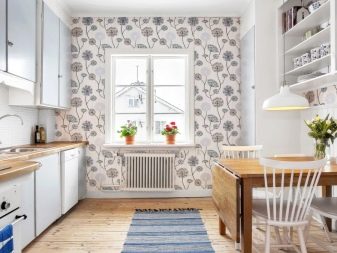
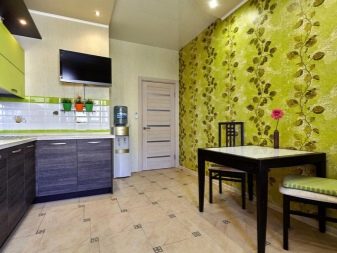
- Vinyl Canvases more durable, have an upper synthetic layer. They do not fade, allow wet cleaning. However, they do not pass air at all, which can contribute to the appearance of the fungus. To avoid this, you need to ventilate the room daily, especially if the temperature and humidity are increased in it.
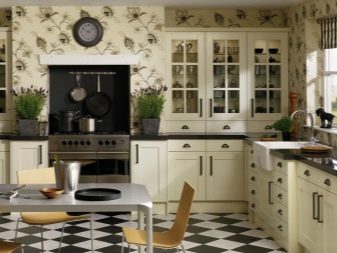
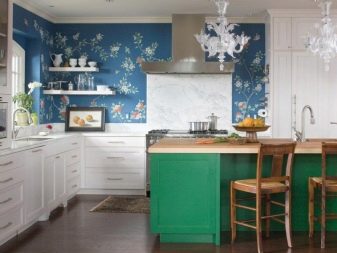
- Silk screen wallpaper - a kind of vinyl. They are distinguished by the presence in the composition of silk threads, which gives an imitation of luxurious fabric.Such products require a perfectly flat surface for gluing.
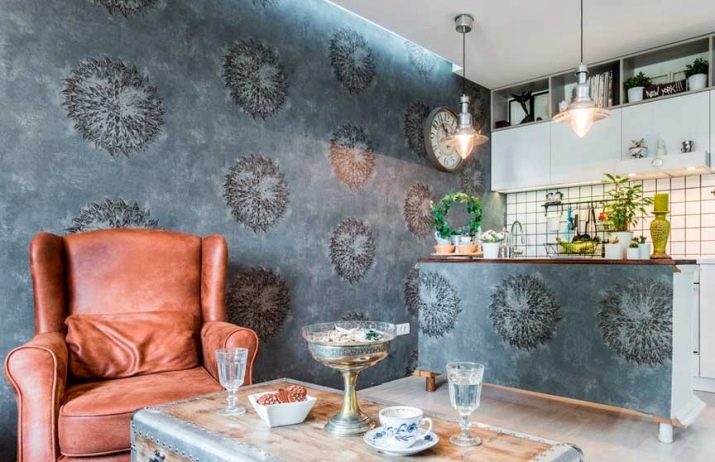
- Non-woven products strong, durable, resistant to high temperatures and humidity, have an interesting texture, allow the walls to "breathe". However, they cost more than other models.
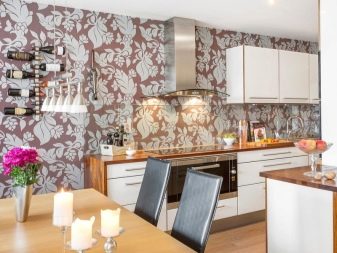
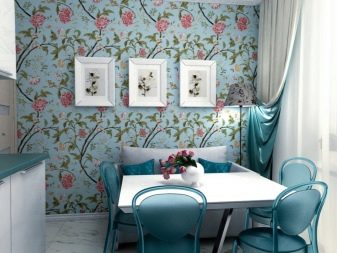
The color scheme and prints should be chosen based on the style of the interior and the decor of the room. For example, calm, noble tones are suitable for classics. Acceptable subtle patterns (floral ornaments, medallions). Minimalism and hi-tech involve monophonic coatings. If you have chosen Provence for your kitchen design, you can decorate it with striped wallpaper or linen in a small flower. Art Nouveau gives room for imagination, but do not buy too colorful wallpapers if your furniture is uneven. Otherwise, you quickly get tired of a riot of colors and prints.
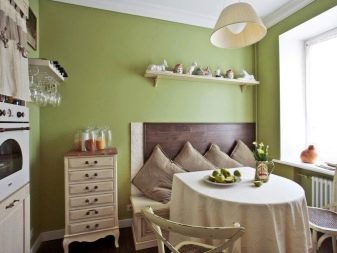
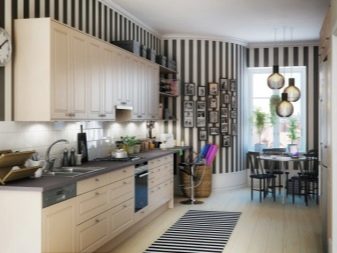
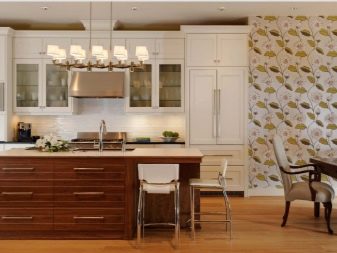
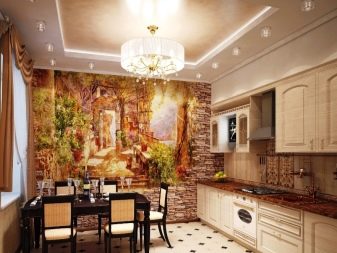
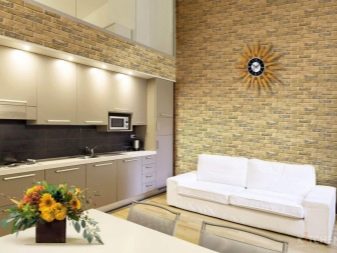
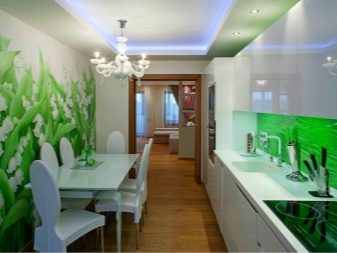
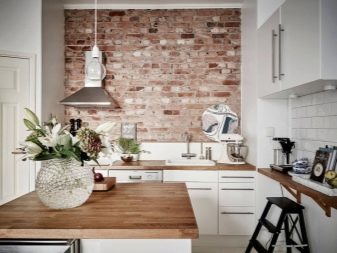
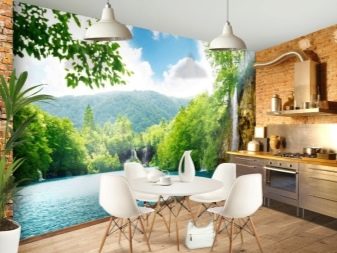
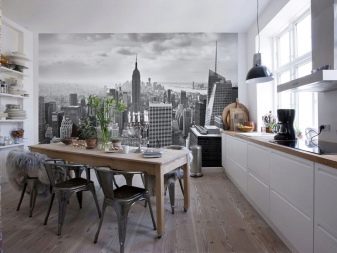
An interesting idea is to use photo wallpaper to highlight an accent wall or create a visual effect of increasing the area of a room. A tricky move is the use of wallpapers that mimic the texture of some other materials (for example, brick or stone).
Plastic
Plastic panels are another relatively inexpensive type of decorative finish. The material is reliable, durable, looks good, easy to clean. Often plastic is used to decorate a kitchen apron, but if desired, other walls can also be designed.
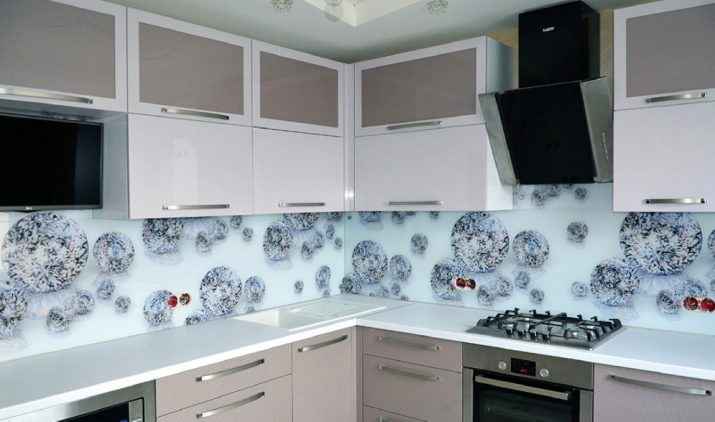
Of course, for an elegant classic, such a finish is not suitable. But in modern styles, it can look pretty good. It is only necessary to take into account the low resistance of the material to mechanical stress (a crack may form from impact), the ability to lose light under prolonged exposure to ultraviolet radiation. Well, of course, do not forget that when decorating the walls with panels, as much as 4 centimeters is lost, which is undesirable for small rooms.
Tile
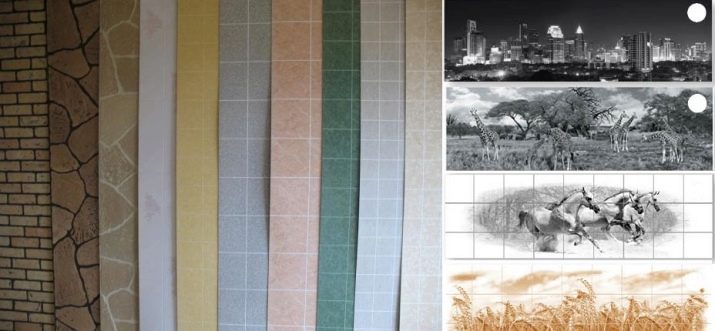
Ceramic wall decoration is a reliable option. The material is durable, resistant to moisture, easy to clean, and is fireproof. Such decoration will serve the owners of the house for many years. However, only a kitchen apron is usually tiled. It is not recommended to use it to decorate the entire kitchen, although in some cases it can look quite good (for example, if the tile imitates brick).
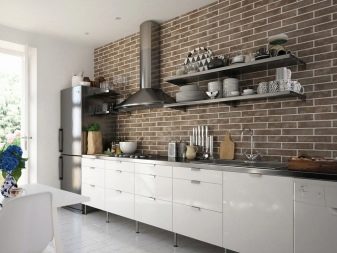
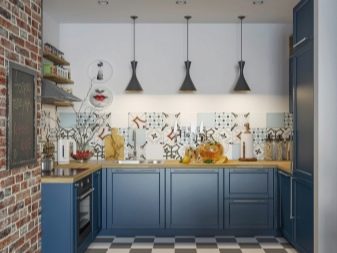
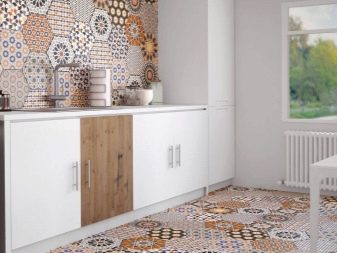
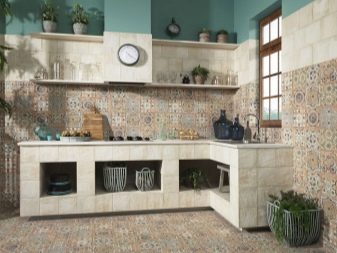
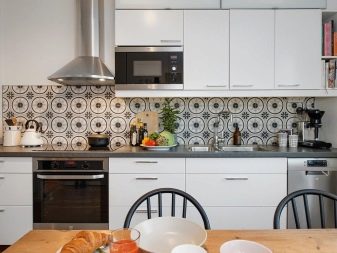
Tile covering a large area of walls can be entered in the styles of loft, country, Scandinavian. Ceramic apron looks good in any interior. The main thing is to choose a suitable shape, color and pattern. For example, the Provence style can be emphasized with square patchwork tiles, and for a neoclassical interior you can choose a snow-white “boar” or mosaic.
A rock
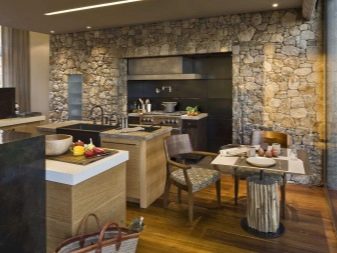
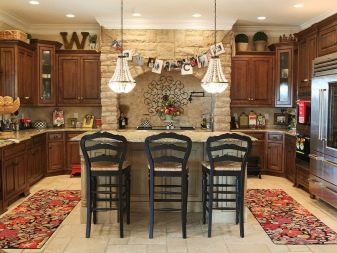
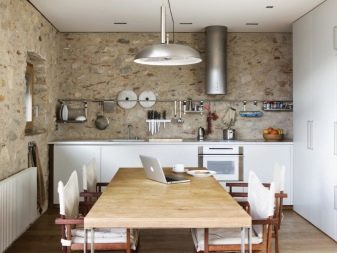
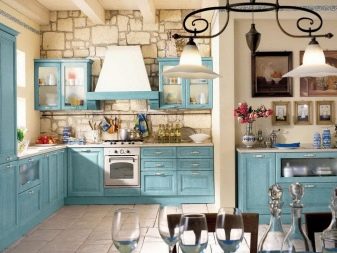
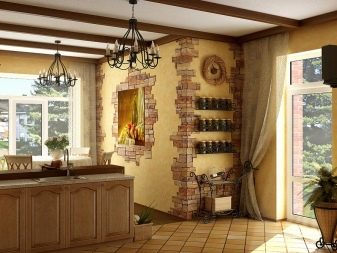
Decorative stone looks solid, noble and expensive. It looks especially good in vintage interior styles, although it can fit into modernity. The material is durable, steadily withstands elevated temperatures, does not absorb dirt and grease, it is not afraid of biological threats (fungus, mold).
However, this finish is quite expensive. In addition, the material is notable for its considerable weight. Decorating walls with it requires special skills. Therefore, it is better to make sure that the wall can withstand such a heavy load, find the thinnest tiles and seek the help of professional craftsmen without trying to finish it yourself.
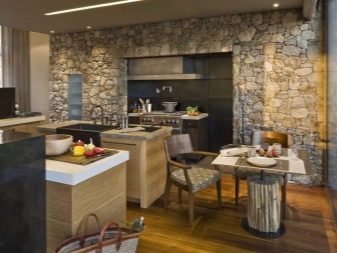
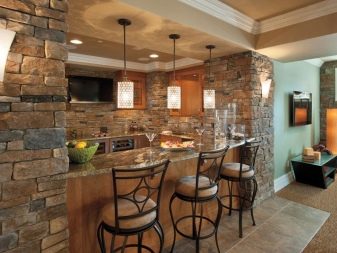
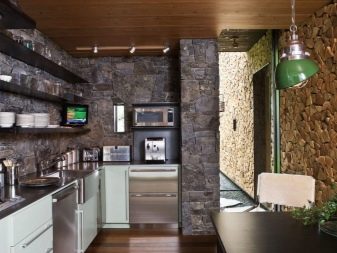
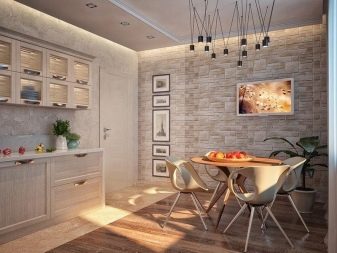
Often the stone is combined with painting or plaster. Such an interior looks lighter and more interesting.
Decorative plaster
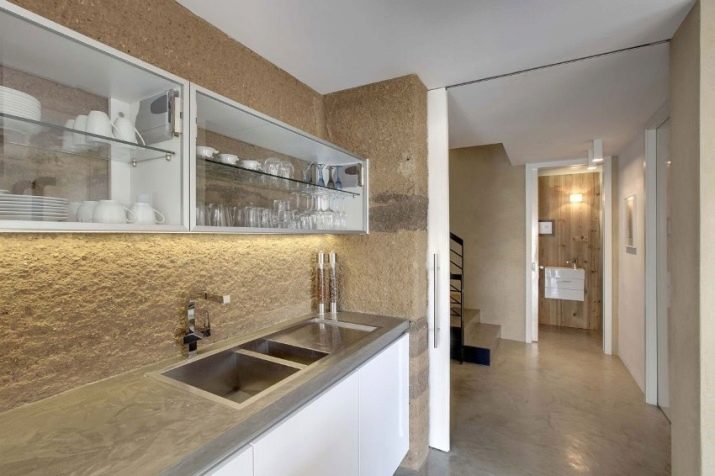
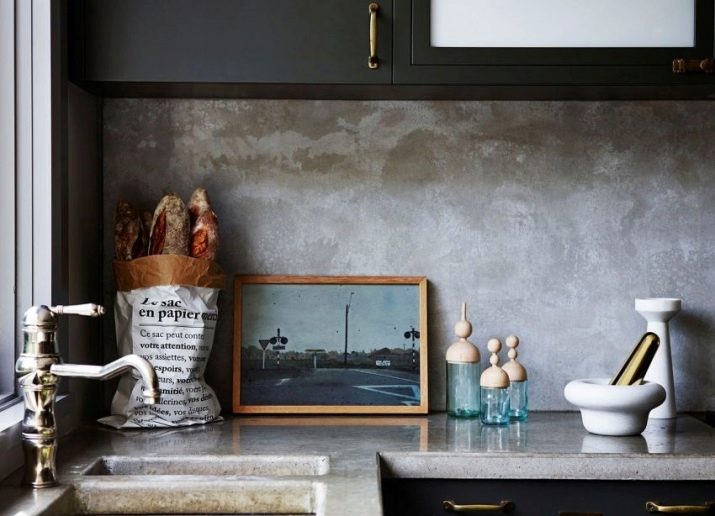
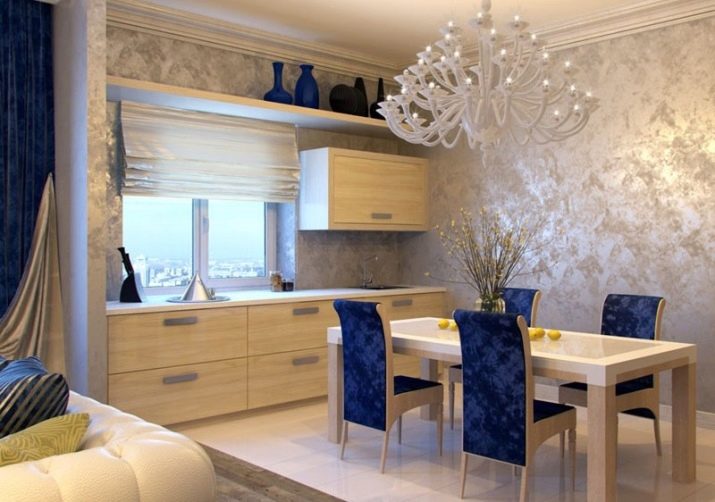
This material is able to create a unique design. When decorating, a special type of material is applied, applied to the main layer. Depending on the tools used and the method of applying the composition, various patterns can be obtained.
The material does not require prior alignment of the wall, masking small defects. The coating is durable, resistant to moisture and mechanical stress. It does not absorb odors and pollution, looks presentable.The only drawback of this finish is its high cost.
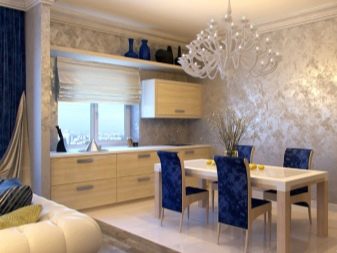
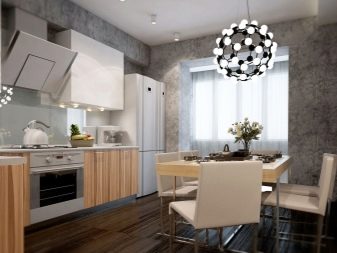
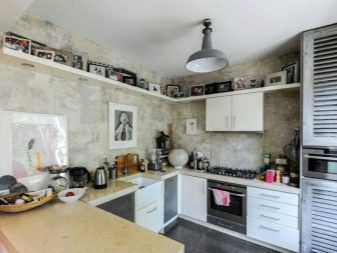
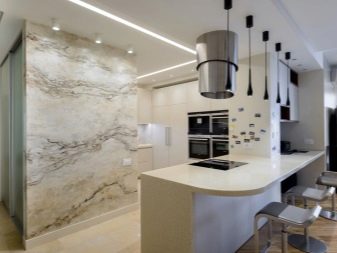
There are several varieties of decorative plaster.
- Roller. Creates a three-dimensional pattern, can be painted after application.
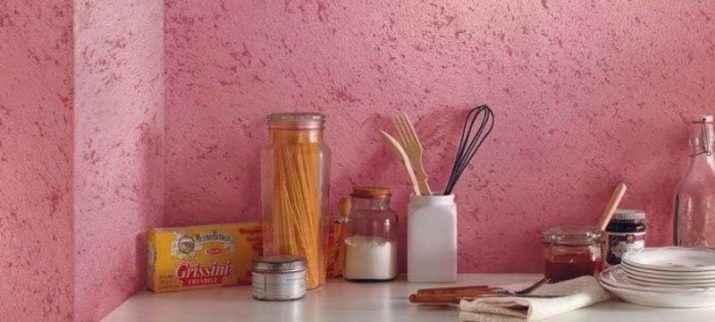
- Latex. Able to imitate natural stone. Coloring occurs during the mixing process.
- Wet Silk. It forms a coating with the effect of delicate satin fabric.
- "Sea breeze". This look is beautifully cast with mother of pearl.
Decorating walls with plaster requires great accuracy. To enhance the protection of the coating, it can be fixed with special wax.
Brick
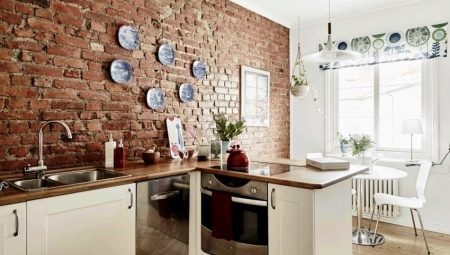
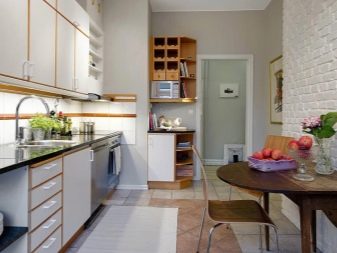
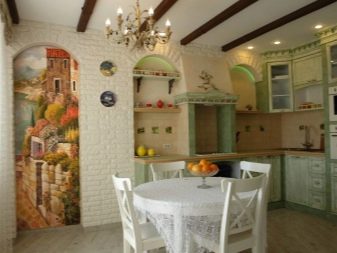
Using bricks for interior decoration is an interesting solution. This way of decorating can favorably emphasize the originality of country and Provence, give greater brutality to the loft style kitchen. The material may have a red-brown or grayish natural hue or be painted white. Snow-white brickwork looks more sophisticated, so it can fit into classic interiors and modern rooms.
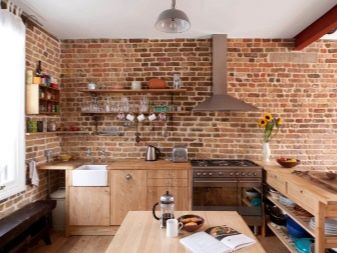
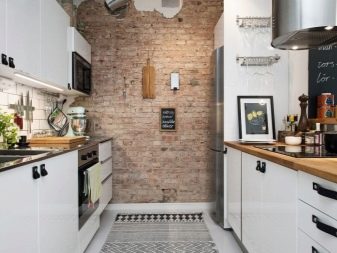
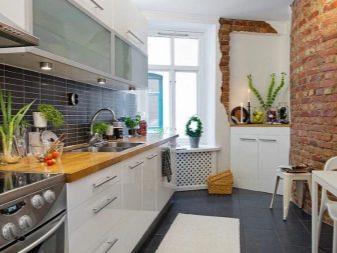
The advantages of the material are known to everyone. It is strong, durable, reliable, resistant to any impact. Subsequently, if desired, you can easily change the design by applying plaster to the brick. The resulting surface can be painted or wallpapered.
Bung
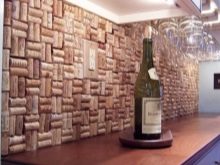
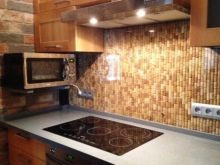
This natural material is rarely used in room design. It fits perfectly into the eco-style, but in other cases is not very effective. In this case, the cork can create good sound and heat insulation. It does not accumulate dust, is resistant to moisture, prone to mold. The only negative - the coating burns out in the sun. In addition, it is desirable to maintain stable humidity in such a room, otherwise the boards may dry out slightly.
Wooden lining
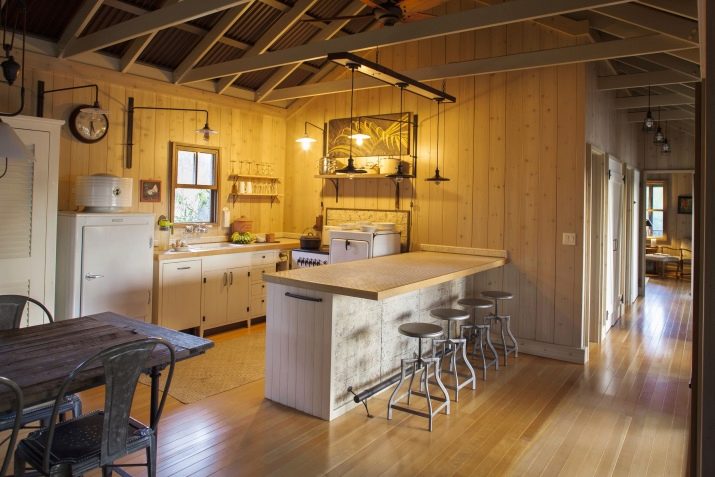
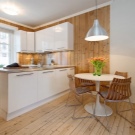
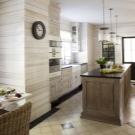
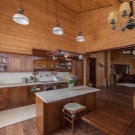
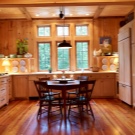
MDF slats look great in the country, as well as when creating a rustic or Scandinavian style in an apartment. In the latter case, the tree is painted white. The style of Provence will be relevant light gray or blue tone of the walls. Country suggests natural shades of wood. A lining should protect the lining from the negative effects of moisture and heat.
With this design, open wooden shelves, wall clocks, small framed paintings look great. You can combine the lining with wallpaper or painted surfaces. In this case, the tree is located at the bottom of the wall.
Paint
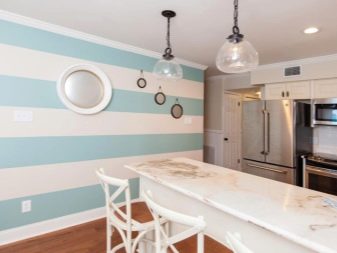
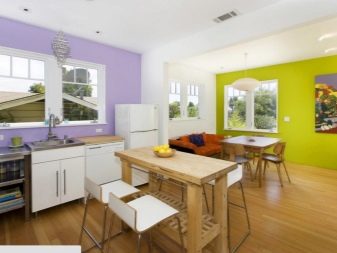
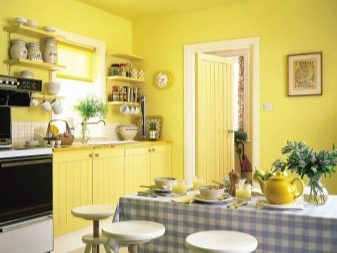
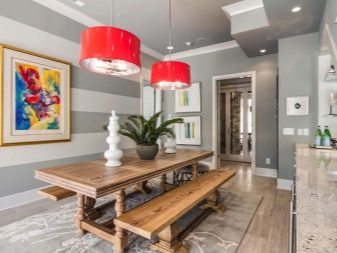
Painting is the simplest and most universal method of decorating walls, appropriate for any style. For the kitchen, water-based paint is suitable. It is hypoallergenic, does not smell and dries quickly, and the result is pleasing to the eye. The painted glossy surface can be washed. If the walls are not perfect, you can take a matte paint. She will visually hide defects.
Flock coating
This is a very unusual decorative coating, which includes many small particles resembling flakes. The work is carried out in 3 stages. First, special acrylic glue is applied. Then flakes are sprayed from the gun or compressor. After 12 hours, all this beauty is fixed with two layers of top coat.
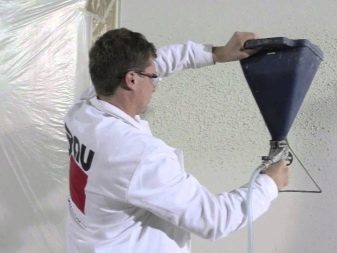
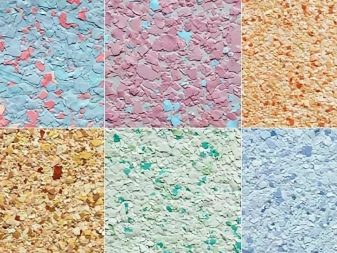
Flakes can have different shapes and colors. The coating can be either monophonic or colorful, have a metallized or pearly sheen. The material is durable, easy to clean (the wall can be wiped with a damp cloth). The coating is environmentally friendly, does not fade in the sun and looks luxurious. The disadvantages include the high price and complexity of installation.
How to choose a color?
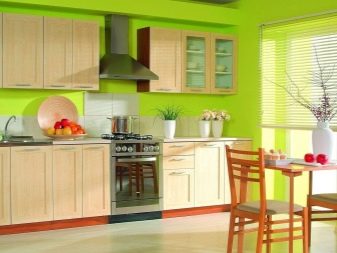
For small rooms, light colors are more suitable, visually expanding the space (white, beige, pastel shades). In a spacious kitchen, darker, saturated colors are acceptable. Warm tones make the room more comfortable, while cold tones create a feeling of freshness even on a hot day. In addition to the size of the room and personal preferences, when choosing the color of the walls, it is worth considering the style of the interior.
We take into account the style
Each style has its own materials and shades. Classic vintage styles require soft muted tones. Bright colors are acceptable in a modern setting. White color is universal, it is always appropriate.
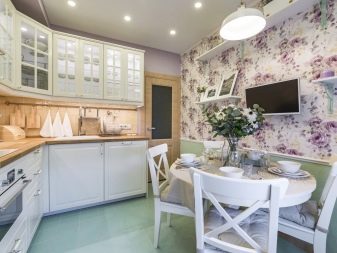
The choice of prints is also specific. Stripes and small flowers are appropriate in Provence, monograms - in the classics. Modern rooms are often decorated with photo wallpaper or other decor, preferring plain colors. Sometimes choose wallpaper with geometric patterns, floral themes.
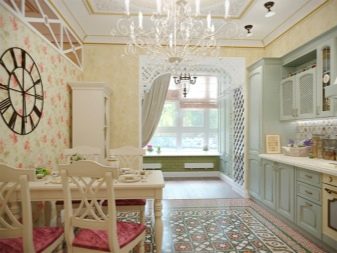
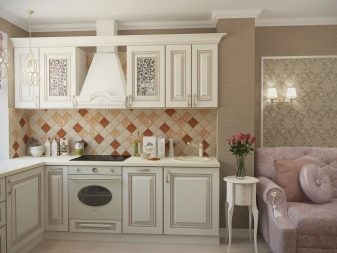
As for materials, the classic allows staining, finishing with stone or decorative plaster, wallpaper. The rustic styles fit wallpaper, wall paneling and brick. The rough style of the loft is usually emphasized by brick or paint. The cork is ideal for an eco-interior. The minimalism and hi-tech styles are characterized by plastic trim, staining, and ceramic tiles.
Interesting ideas for decorating walls in the kitchen
Each kitchen always has at least two zones: a dining area and a cooking zone. Consider how you can choose the design of the walls in each of them.
Near the dining table
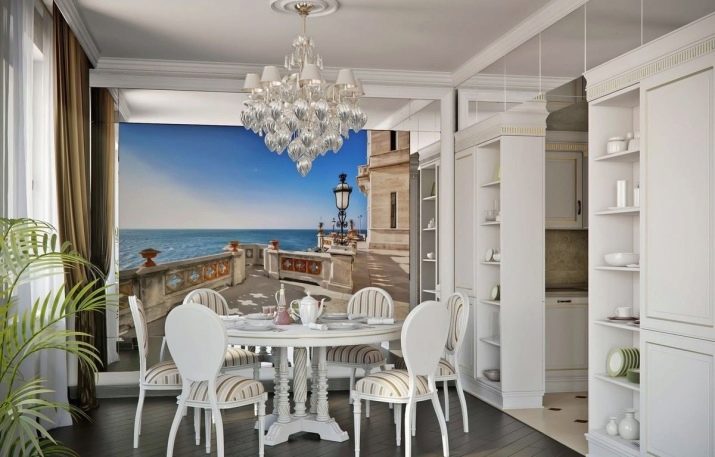
If the wall with the table is free, you can decorate it with photo wallpaper. Subjects are selected based on the style and color scheme of the environment. For small kitchens, panoramic images are recommended. Sandy beach, a terrace with a picturesque view or a street with flowering trees, stretching into the distance - there are many options. This technique imitates the continuation of the room, visually expanding it.
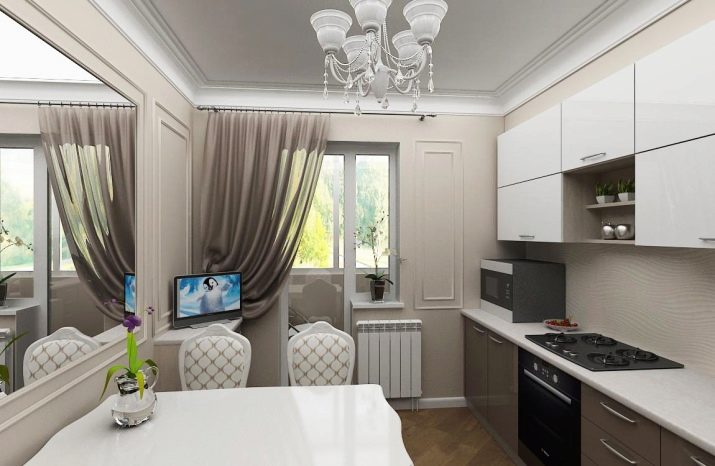
Another option for visual space correction is a mirror. Mirror can be as the entire wall, or part of it. Especially often this technique is used in neoclassicism.
In the working area
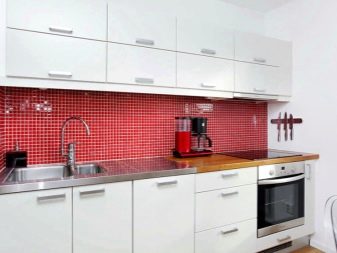
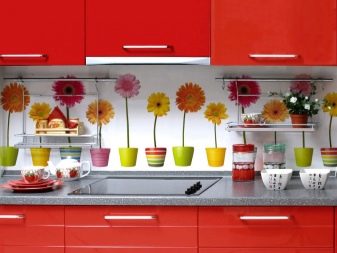
An apron can be an interesting accent or a modest and neutral one. In the second case, it is a plain tile or plastic. This zone can be distinguished using ceramic panels, mosaics or glass aprons with photo printing.
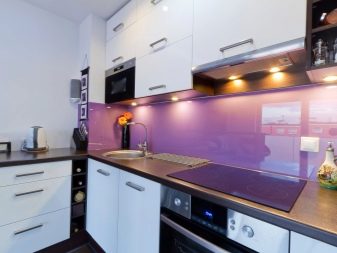
Accent Wall Options
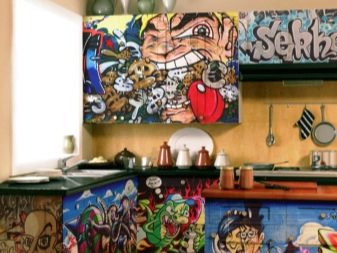
In addition to photo wallpaper, there are other ways to effectively design an accent wall. For example, it can be a decoration from another material, ordinary wallpaper with a catchy print or art painting. A modern and unusual option is a painted slate board or chalky wallpaper. And also it is possible to paint all or part of the wall with graphite paint. On such a surface, households can write their plans for the day or wishes to each other, leave funny drawings and notes.
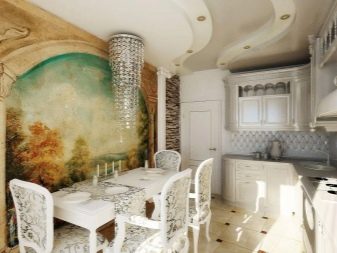
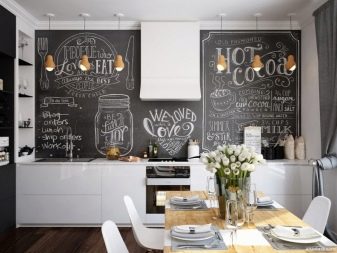
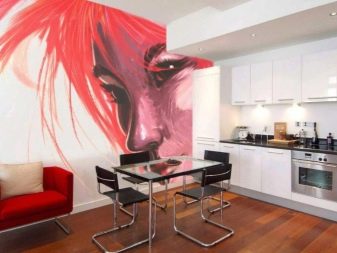
Using decor elements
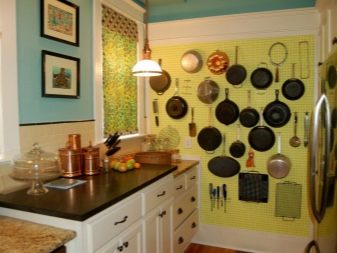
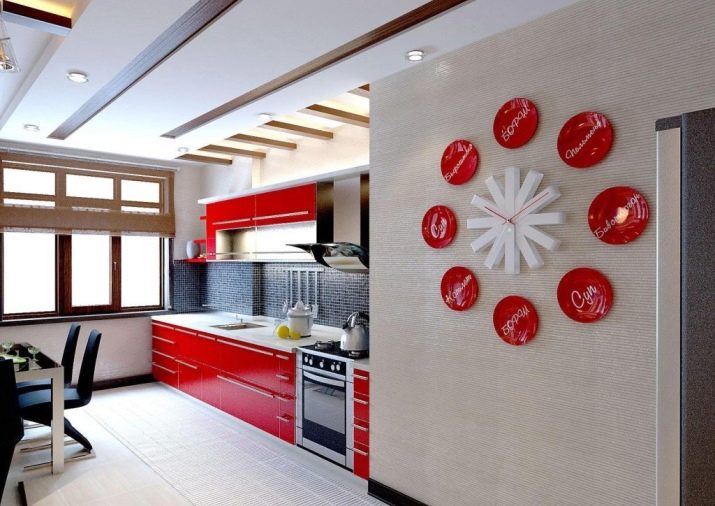
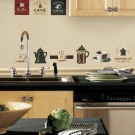
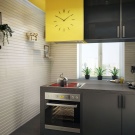
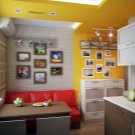
Additionally, the walls can be decorated with various decor. There are many options: modular and ordinary paintings, posters, framed photographs under glass, wall clocks. In classic interiors, graceful sconces are appropriate. Shelves with beautiful dishes and souvenirs, cutting boards, decorative plates can emphasize the rustic style. Interior letters with or without highlighting look interesting. Solid walls in a modern kitchen can be supplemented with a vinyl sticker.
Tips for combining different materials
If the kitchen is very small, you can use one material to decorate the walls, for example, painting or ceramic tiles.
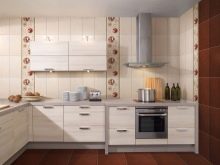
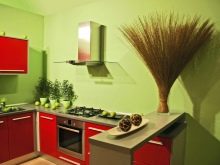
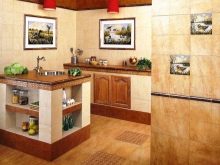
If the room is more spacious, it makes sense to make zoning. The finish of the working area should be as resistant to pollution, steam, water. Wall decor in the dining area may be more refined. For example, you can combine a beautiful glass or ceramic print apron and plain walls. It can be used plaster, flock, wallpaper. If you plan to highlight an accent wall, it is better to make the apron neutral so as not to overload the interior.
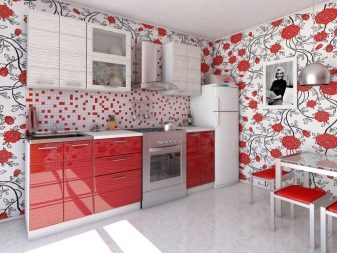
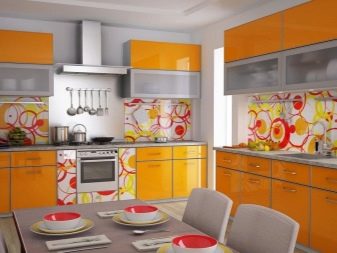
The most sophisticated finishes where three materials combine (no longer recommended). For such experiments, it is better to attract experienced designers. For example, it may be a combination of plaster, stone and tile for the working area of a classic kitchen.Another example is paint, glossy plastic and high-tech apron glass.
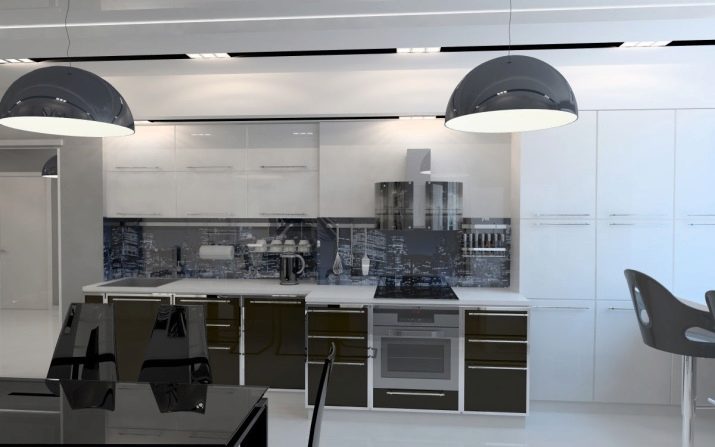
Beautiful examples in the interior
Consider interesting Wall decoration options in the kitchen.
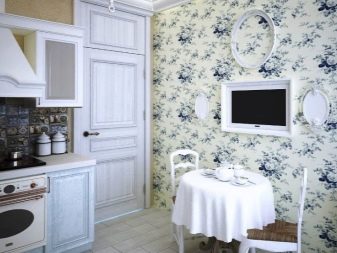
- White wallpapers with blue flowers fit perfectly into the aesthetics of the shabby chic style.
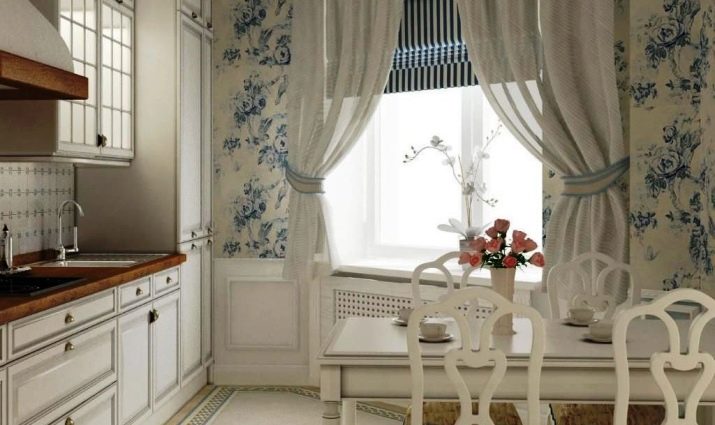
- Black, white and gray are the colors that are characteristic of minimalism. Imitation of masonry is perfectly combined with plain surfaces.
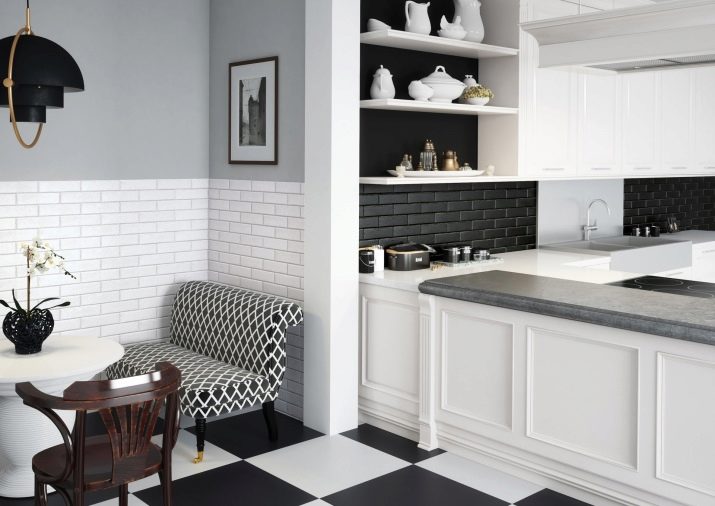
- Monochrome bright color can be diluted with delicate photo wallpaper.
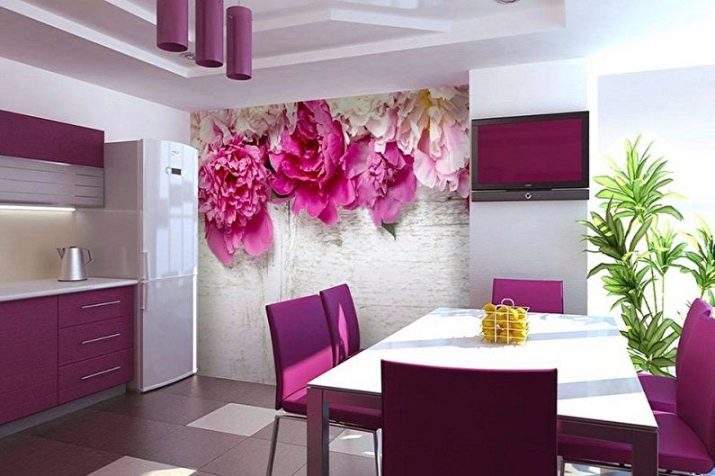
- The classic elegance of the setting and the illusion of a magnificent view of the sea create a romantic mood.
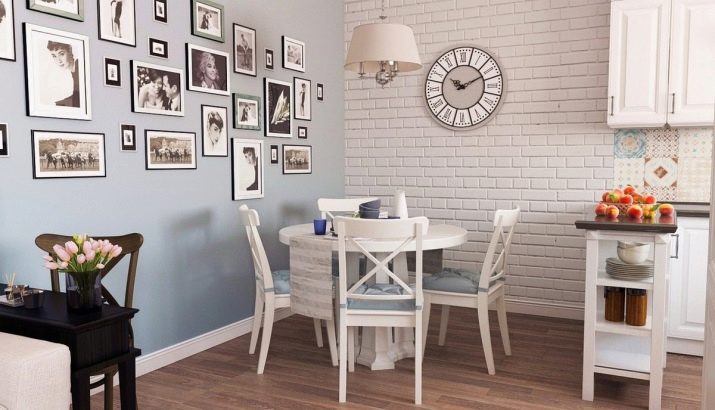
- Black and white photos and a wall clock are a great decoration for retro style. Tile patchwork in bright colors gently highlights the working area.